The outdoor recreation category is becoming increasingly interesting for retailers, and camping mats fit neatly into that opportunity. A camping mat is a simple product, but its usefulness extends across camping, picnics, festivals, beaches, gardens, RV travel, outdoor events, and temporary outdoor living spaces. Current market research indicates continued expansion in India's camping and outdoor recreation sectors. One 2026 market report estimates that India's camping equipment market could grow from approximately $485.3 million in 2026 to $1.26 billion by 2035, while another estimates a 14.66% CAGR for the 2025–2030 period. The exact market size differs between research methodologies, but the direction is consistent: outdoor recreation is attracting more consumer and commercial attention.
For a retailer, this creates an opportunity beyond simply selling tents and sleeping bags. Customers who purchase outdoor equipment often need complementary products that make the experience easier and more comfortable. A woven camping mat can provide a clean surface outside a tent, create a defined sitting area, help protect belongings from damp ground, or simply make an outdoor space look more organized. That versatility makes camping mats particularly attractive as an add-on product. When sourced from a reliable camping mats bulk supplier India, retailers can also explore different sizes, colors, designs, packaging formats, and private-label options rather than depending on one generic product. In other words, the mat becomes more than an accessory; it can become a profitable category within an outdoor product range.
Growing Interest in Camping and Outdoor Recreation
Camping is no longer limited to a small community of experienced adventurers. Outdoor travel, weekend getaways, nature tourism, road trips, RV travel, family picnics, and destination camping have broadened the customer base. India's camping-tent market alone was estimated at $313.5 million in 2025, with a forecast of $456.9 million by 2034, according to IMARC. The report connects this growth with domestic tourism, adventure travel, eco-tourism, e-commerce availability, and demand for lightweight and weather-resistant equipment.
This changing consumer behavior matters to retailers because it creates multiple opportunities to merchandise camping mats. A specialist outdoor store can place them beside tents and camping furniture. A garden retailer can promote them as outdoor floor coverings. A beach and picnic retailer can position them as portable seating surfaces. An online seller can create separate collections based on camping, RV, beach, picnic, balcony, and festival use. The same basic manufacturing platform can therefore support several retail segments. When the supplier can customize the design, the retailer gains another advantage: instead of competing only on price, the business can create a recognizable product identity.
What This Means for Retailers
The biggest lesson for retailers is that product versatility can reduce category risk. Imagine stocking a product that is useful only during one short camping season. Inventory becomes difficult to manage when demand slows. Now imagine a mat that can be promoted for camping in one campaign, picnics in another, outdoor festivals during summer, balconies throughout the year, and RV travel during holiday periods. Suddenly, the same inventory has several potential sales channels.
That is one reason bulk buyers should look beyond the basic question of "What is the price per mat?" A stronger sourcing question is "How many different customer needs can this product serve?" A well-designed woven outdoor mat can answer that question convincingly. Retailers should evaluate durability, folding convenience, cleaning, colors, dimensions, packaging, customization, and repeat-order capacity before making a large purchase. This approach helps turn bulk sourcing into a long-term retail strategy rather than a one-time procurement exercise.
Why Choose a Camping Mats Bulk Supplier India
Choosing an Indian supplier can make sense for businesses looking for scalable production, product customization, and competitive manufacturing economics. India's established textile, plastics, weaving, and export industries provide a broad manufacturing base, and several Indian companies currently produce polypropylene outdoor rugs and mats for domestic and international markets. For example, manufacturers in Maharashtra advertise camping/RV mats, beach mats, picnic mats, patio mats, and customized woven plastic floor coverings for global customers.
The benefit of working directly with a manufacturer or experienced bulk supplier is control. Instead of buying whatever is already available from a distributor, a retailer can discuss size requirements, colors, weave patterns, branding, packaging, and production quantities. This becomes particularly valuable for private-label businesses. A retailer launching an outdoor-living collection may want a coordinated product family rather than an assortment of unrelated mats. The supplier can potentially manufacture several designs under one brand identity, creating a more professional retail presentation.
India also offers an established export ecosystem. Outdoor polypropylene mat manufacturers operate with international buyers, while industry exhibitors list Indian manufacturers with large production facilities and international certifications. For a buyer, however, the key is not simply choosing India as the sourcing country. The supplier itself must be evaluated carefully. Production capability, quality consistency, communication, packaging, documentation, lead times, sample approval, and after-sales support all influence whether a sourcing relationship actually works.
Cost Advantages of Bulk Sourcing
Bulk purchasing can improve the economics of camping mats because manufacturing, packaging, and logistics can often be planned around larger production runs. A retailer purchasing a few dozen pieces from a local intermediary may pay a significantly different unit cost than a business ordering a properly planned wholesale production quantity. The exact savings depend on material, size, design complexity, packaging, order quantity, shipping method, and customization, so there is no universal wholesale price that applies to every buyer.
The smarter approach is to calculate the landed cost, not simply the factory quotation. Landed cost can include the product itself, packaging, inland transportation, export documentation, freight, insurance where applicable, customs duties, taxes, warehousing, and local distribution. A cheap factory price can lose its advantage if packaging is inefficient or shipping costs are unexpectedly high. Conversely, a slightly higher product price can still produce a better business outcome when the supplier provides stronger quality, efficient packing, dependable lead times, and fewer defective units.
Key Features of Quality Camping Mats
Retailers should treat product specifications as a checklist rather than accepting vague descriptions such as "premium quality." A strong camping mat should be evaluated for its construction, material, dimensions, weight, foldability, edge finishing, surface appearance, moisture resistance, UV performance, cleanability, and overall durability. Different customers have different expectations, so the ideal specification depends on the market in which the product will be sold.
Woven polypropylene is commonly used in outdoor mats because it can provide a combination of low weight, durability, cleanability, and outdoor suitability. Indian manufacturers currently market polypropylene mats for camping, RVs, beaches, picnics, patios, gardens, and commercial environments. A retailer should still request samples before placing a large order because two products described as "PP mats" can differ substantially in yarn quality, weave density, backing, edging, weight, and finishing.
A useful specification sheet should clearly identify the material composition and product dimensions. It should also specify whether the product is reversible, washable, UV resistant, water resistant, foldable, or supplied with a carry bag. Retailers can then translate these technical features into customer-friendly benefits. Instead of saying only "polypropylene woven construction," product packaging could explain that the mat is lightweight, easy to clean, portable, and suitable for outdoor use.
Woven Polypropylene Construction
Woven polypropylene is especially relevant to outdoor mat manufacturing because it can be formed into durable woven structures while remaining relatively lightweight. Some Indian manufacturers describe their outdoor mats as being woven from virgin or recycled plastic materials and highlight features such as UV resistance, washability, reversibility, and indoor/outdoor versatility.
For retailers, the weave is not merely a technical detail. It affects the appearance, texture, flexibility, durability, and perceived quality of the product. A tighter or heavier construction may suit customers who expect frequent outdoor use, while a lighter construction may be attractive to shoppers who prioritize portability. The retailer should match construction to the intended market rather than assuming that one specification will work for every customer.
Sampling becomes extremely important here. Buyers should physically examine several pieces from a production batch, checking the consistency of the weave, edge finishing, color, dimensions, folding behavior, and surface quality. If the mat is intended for export, the approved sample should become the reference point for subsequent production. Clear specifications reduce misunderstandings and help both buyer and supplier maintain consistency across repeat orders.
Weather Resistance and Outdoor Durability
A camping mat lives in a more demanding environment than an indoor decorative rug. It may encounter soil, grass, sand, moisture, sunlight, accidental spills, repeated folding, transportation, and rough handling. That is why outdoor durability should be one of the first considerations when selecting a supplier. Retailers should ask how the product performs under normal outdoor conditions and which features have been incorporated to support that use.
UV resistance can be particularly relevant because prolonged exposure to sunlight may affect colors and materials. Water resistance and quick-drying characteristics can also make a product more convenient for outdoor customers. However, retailers should avoid making exaggerated claims such as "100% waterproof" unless the supplier has appropriate testing or documentation to support that claim. Marketing language should accurately reflect the product's tested capabilities.
Durability also includes construction details that consumers may not notice immediately. Reinforced or neatly finished edges can help the mat maintain its shape. Consistent weaving can improve the appearance and reduce weak areas. A strong supplier should have quality-control procedures that identify manufacturing defects before the goods are packed. This is especially important in bulk orders because even a small defect rate can translate into hundreds of problematic units when production quantities become large.
Lightweight and Foldable Designs
Portability is one of the strongest selling points for camping mats. Outdoor consumers rarely want a product that is difficult to carry from the vehicle to the campsite. A mat that folds or rolls compactly can fit more easily into a car, RV, storage compartment, backpacking setup, or travel bag. This simple feature can have a major effect on customer satisfaction because convenience is often what separates an outdoor product that gets used regularly from one that stays in storage.
Retailers should therefore examine the folded dimensions as carefully as the open dimensions. A large mat may look impressive in a product photograph, but if it becomes awkward to transport, the practical value can decline. Carry straps, bags, handles, or compact folding systems can improve usability. Some Indian camping mat manufacturers specifically promote portable formats and carry solutions as part of their outdoor product offering.
For e-commerce sellers, portability also affects packaging and shipping. A compact folded product can potentially reduce storage requirements and make warehouse handling easier. Product photographs should show both the full-size mat and its folded form so customers immediately understand the portability advantage. Retailers can then position the mat as a practical companion for weekend trips rather than simply another piece of outdoor flooring.
Custom Sizes, Colors, and Patterns
Customization can help a retailer escape direct price competition. Instead of selling an identical generic mat available from dozens of sellers, a business can develop a recognizable collection with its own colors, patterns, dimensions, and packaging. Indian manufacturers in this category advertise customization across designs, styles, colors, sizes, and shapes.
This flexibility is particularly useful for retail chains and private-label brands. A camping retailer might request earthy colors and adventure-inspired patterns. A home-and-garden retailer could choose neutral geometric designs. A beach brand might prefer bright colors and tropical motifs. The underlying manufacturing process can remain similar while the visual identity changes to match the target customer.
Retailers should provide suppliers with a clear product specification before production begins. It can include dimensions, color references, pattern artwork, logo placement, packaging requirements, labels, barcode information, and carton markings. A pre-production sample or digital approval process can reduce the risk of receiving goods that do not match the intended retail presentation.
Private Label and OEM Opportunities
Private labeling can turn a standard camping mat into a branded retail product. Instead of presenting the item simply as a generic "camping mat," a retailer can create a collection under its own brand name and develop consistent packaging across multiple outdoor products. This can improve brand recognition and create opportunities for repeat purchases.
OEM and private-label manufacturing can be especially useful for businesses that already sell tents, outdoor furniture, picnic accessories, camping cookware, travel products, or garden items. The mat becomes part of a wider ecosystem rather than an isolated product. A supplier capable of producing custom patterns and packaging can help the retailer maintain visual consistency.
Before agreeing to a private-label program, buyers should clarify minimum order quantities, artwork requirements, packaging costs, tooling or setup charges where applicable, production lead times, sample procedures, quality standards, and intellectual-property responsibilities. These details may appear administrative, but they protect both sides and make repeat ordering considerably easier.
Camping Mats for Different Retail Markets
One of the strongest characteristics of camping mats is their cross-category appeal. Outdoor retailers can sell them directly to campers, while garden stores can present them as patio or balcony mats. Travel stores can promote them for road trips and RVs. Beach and picnic businesses can position them as portable outdoor seating surfaces. Event companies may use them for temporary flooring or activity areas.
This broad application gives retailers several ways to build demand. Search-driven e-commerce sellers can create separate landing pages for "camping mats," "picnic mats," "RV mats," and "outdoor rugs," provided that the actual product genuinely fits each use. Physical retailers can create seasonal displays. Wholesale distributors can offer the same product to multiple downstream industries.
The key is to avoid confusing customers. Product specifications should clearly state the recommended applications and limitations. If a mat is designed for general outdoor ground coverage rather than technical sleeping insulation, it should not be marketed as a specialized thermal sleeping pad. Honest positioning protects customer trust and reduces returns.
How Retailers Can Select the Right Supplier
Selecting a camping mats bulk supplier India should involve more than comparing three quotations. A supplier should be evaluated on manufacturing capability, product quality, customization, communication, production capacity, documentation, packaging, delivery performance, and willingness to provide samples. Buyers should also investigate whether the supplier has experience serving wholesale or export customers.
A practical supplier-evaluation process can begin with a written product specification. Request samples and compare them against the specification. Ask about MOQ, production lead time, available materials, customization, packaging, quality inspection, payment terms, shipping arrangements, and documentation. If possible, review factory information and evidence of previous export experience.
Online supplier directories show that India has a substantial network of camping and outdoor-equipment manufacturers and suppliers, but directory presence alone should not be treated as proof of manufacturing quality. A serious buyer should conduct its own due diligence before committing to a large production order.
Quality Control and Manufacturing Standards
Quality control becomes increasingly important as order quantities grow. If a retailer purchases 100 pieces and five have defects, the issue may be manageable. If the retailer purchases thousands of pieces, the same defect rate can create a significant financial and reputational problem. A good supplier should therefore have defined inspection procedures covering raw materials, weaving, dimensions, colors, finishing, packaging, and final products.
Retailers can establish their own quality-control requirements in the purchase agreement. These might include acceptable dimensional tolerances, color consistency, edge finishing, packaging standards, labeling requirements, and procedures for handling defective goods. Independent inspection can also be considered for larger international shipments.
Some Indian manufacturers report audits or certifications from organizations such as SGS, Intertek, BSCI, GRS, OEKO-TEX, or REACH-related compliance programs, depending on the company and product. Buyers should always verify which certification applies to which facility and product rather than assuming that a company's certification automatically covers every item.
Packaging and International Shipping
Packaging is an often-overlooked part of bulk sourcing. A camping mat may be durable, but poor packaging can still result in dirty, damaged, compressed, or incorrectly labeled goods during transportation. Retailers should discuss individual packaging, carton dimensions, carton quantities, protective materials, shipping marks, barcode labels, and palletization before production starts.
For international buyers, packaging efficiency has a direct connection to freight economics. If products can be folded or packed efficiently, more units may fit into a shipment. That can influence the landed cost per piece. However, packaging should not be reduced to the point where product protection becomes inadequate.
Export documentation also deserves attention. The supplier and buyer should clarify commercial invoices, packing lists, certificates, shipping documents, country-of-origin requirements, and any product-specific documentation required by the destination market. Experienced export suppliers can help reduce administrative friction, but the buyer remains responsible for understanding its own import obligations.
Comparing Bulk Camping Mat Sourcing Options
Retailers typically have several sourcing choices: buying from a local distributor, purchasing from a domestic manufacturer, importing from an overseas factory, or working directly with an Indian export-oriented manufacturer. Each option has different advantages.
|
Sourcing Option |
Main Advantage |
Potential Challenge |
Best For |
|
Local Distributor |
Convenient purchasing |
Higher intermediary costs |
Small retailers |
|
Domestic Manufacturer |
Easier communication |
Product range may vary |
Regional brands |
|
Overseas Factory |
Large-scale production |
Longer logistics chain |
High-volume importers |
|
Indian Export Manufacturer |
Customization and manufacturing access |
Requires supplier due diligence |
Retailers and private-label brands |
The best option depends on order volume and business strategy. A small retailer may prioritize convenience and low inventory exposure. A growing online brand may prioritize customization and private labeling. A large chain may care more about production capacity, quality consistency, container utilization, documentation, and long-term pricing.
Pricing Factors Retailers Should Consider
There is no single wholesale price for camping mats because the cost depends on numerous variables. Size, GSM or material weight, yarn type, weave pattern, colors, printing or jacquard complexity, edge finishing, carry bags, individual packaging, carton configuration, order quantity, and shipping terms can all influence the final price.
A retailer should request a structured quotation rather than a single unexplained figure. Ideally, the quotation should identify the product specification, quantity, unit price, packaging, production lead time, payment terms, shipping terms, and validity period. This allows different suppliers to be compared on a like-for-like basis.
The cheapest quote is not always the best commercial decision. Suppose Supplier A offers a lower unit price but has inconsistent dimensions and a longer lead time, while Supplier B costs slightly more but delivers consistent quality and stronger packaging. If Supplier A creates returns, delayed launches, or damaged inventory, the apparent savings may disappear. Wholesale sourcing should therefore focus on total value, not simply the lowest factory price.
Sustainable Camping Mat Options
Sustainability is becoming increasingly relevant to retailers, particularly brands selling to environmentally conscious customers. Some Indian manufacturers now market mats made with recycled polypropylene, while others offer combinations of recycled and virgin materials depending on the product specification.
For retailers, sustainability claims should be specific and verifiable. Instead of using broad phrases such as "eco-friendly" without explanation, product descriptions can identify the material used and any verified certification or recycled-content claim. This creates clearer communication with customers.
Durability also plays a role in sustainability. A product that can be used repeatedly, cleaned easily, and stored for many seasons may offer greater practical value than a disposable alternative. Retailers can combine durable construction with responsible material choices to create a stronger product proposition.
How Camping Mats Can Expand a Retail Product Range
A retailer selling camping mats does not need to build an entirely new business category around them. The product can be introduced as a complementary item alongside existing outdoor products. For example, a store selling tents can create a "Complete Campsite" collection containing a tent, mat, folding chair, table, lighting, and storage accessories.
Cross-selling can increase the value of individual customer purchases. Someone buying a tent may already be interested in a mat because it improves the campsite setup. Someone buying a picnic basket may respond to a coordinated outdoor mat. Someone purchasing an RV accessory may see a larger outdoor mat as a practical addition.
Retailers can also experiment with different sizes and price points. A compact entry-level mat can attract budget-conscious shoppers, while larger premium designs can target customers seeking comfort and style. This creates a product ladder that serves multiple customer segments without abandoning the same core category.
Marketing Camping Mats to Modern Consumers
The strongest marketing approach focuses on situations rather than technical specifications alone. Instead of saying "woven polypropylene camping mat," show the product being used beside a tent, underneath camping chairs, at a picnic, beside an RV, or on a sunny balcony. Consumers want to understand what the product will do for them.
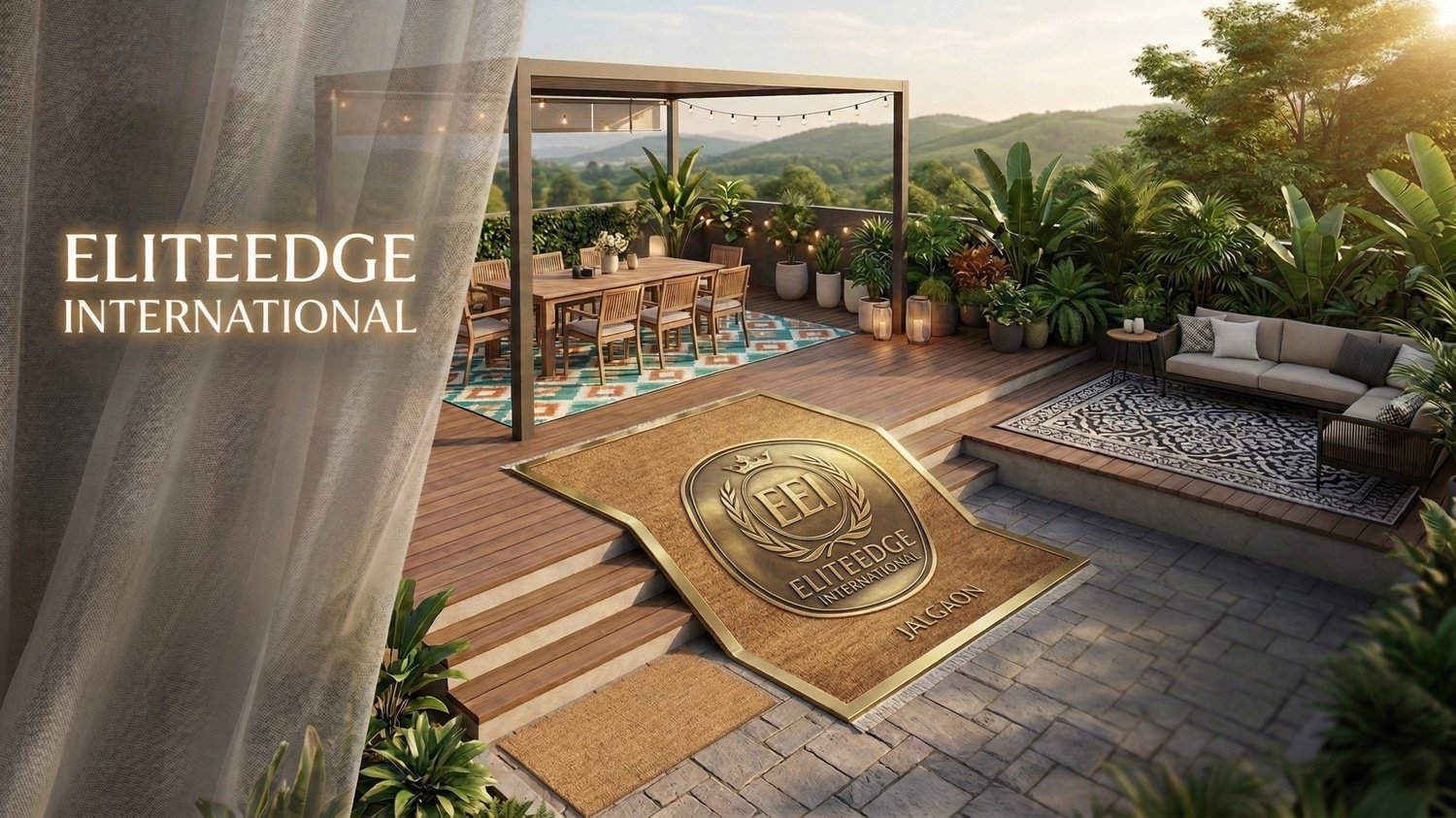
A strong campaign could use lifestyle imagery showing campers using woven outdoor mats near tents. The image should communicate portability, comfort, outdoor durability, and attractive design at a glance. Retailers can then support the visual with short benefit-driven copy such as "Pack it, unfold it, and create your own outdoor space."
Search optimization can also help. Product pages can target phrases such as camping mats bulk supplier India, camping mats wholesale India, woven outdoor camping mats, foldable camping mats, PP camping mats, and outdoor mats for retailers where those keywords accurately describe the products. The objective should be natural relevance rather than keyword stuffing.
Building a Long-Term Supplier Partnership
A strong supplier relationship can become one of the most valuable assets in a growing retail business. Once a product sells consistently, the retailer benefits from predictable replenishment, established specifications, approved packaging, and a supplier that already understands the brand's requirements. Reordering then becomes easier than starting a new sourcing process from scratch.
Communication is central to that relationship. Retailers should share forecasts when possible, communicate seasonal demand, provide feedback on customer preferences, and notify the supplier about upcoming design changes. Suppliers can then plan raw materials and production more effectively.
The relationship should also evolve with the business. A retailer might initially order one standard camping mat. After establishing sales, it could add three colors, two sizes, private labeling, recycled-material options, or coordinated picnic and patio mats. This gradual expansion reduces risk while creating a broader outdoor product portfolio.
Conclusion
The opportunity for retailers lies in the combination of versatility, portability, outdoor durability, customization, and repeat demand. Camping mats can serve campers, families, RV travelers, picnic customers, beach visitors, event organizers, garden users, and outdoor-lifestyle shoppers. Current industry research points to continued growth in India's camping and outdoor recreation categories, creating a favorable environment for businesses exploring related products.
Choosing the right camping mats bulk supplier India can make a major difference to product quality and profitability. Retailers should evaluate material, weave quality, dimensions, weather resistance, foldability, customization, packaging, quality control, lead times, and landed costs before placing a large order. A reliable manufacturer should be able to provide clear specifications, samples, consistent production, and professional communication throughout the sourcing process.
For businesses building an outdoor-living or camping product range, woven camping mats can be a practical category with multiple applications. With the right product design, attractive packaging, accurate marketing, and dependable supply chain, a simple outdoor mat can become a valuable retail product rather than just another camping accessory.
Frequently Asked Questions
1. What should retailers look for in a camping mats bulk supplier India?
Retailers should evaluate manufacturing capacity, material quality, weaving consistency, customization options, MOQ, sample quality, packaging, lead time, export experience, quality-control procedures, and communication. It is advisable to approve a physical sample before placing a large production order.
2. Are polypropylene camping mats suitable for outdoor use?
Polypropylene is widely used for outdoor mats because it can provide lightweight construction, durability, easy maintenance, and outdoor suitability. Some manufacturers also offer UV-resistant, washable, reversible, and recycled-polypropylene options.
3. Can camping mats be customized for private-label brands?
Yes. Depending on the manufacturer, buyers may be able to customize colors, sizes, patterns, branding, packaging, labels, and other product details. Minimum order quantities and customization capabilities should be confirmed with the supplier before production.
4. How can retailers reduce the cost of bulk camping mats?
Retailers can compare landed costs rather than only factory prices, optimize order quantities, select efficient packaging, standardize designs where practical, and negotiate long-term supply arrangements. Larger production runs may also improve unit economics, depending on the supplier and specification.
5. Can camping mats be used for purposes other than camping?
Yes. Depending on their construction and specifications, outdoor mats can also be marketed for picnics, beaches, RVs, balconies, patios, gardens, festivals, outdoor events, and general outdoor recreation. Their multi-purpose nature is one reason they can work well in retail product portfolios.