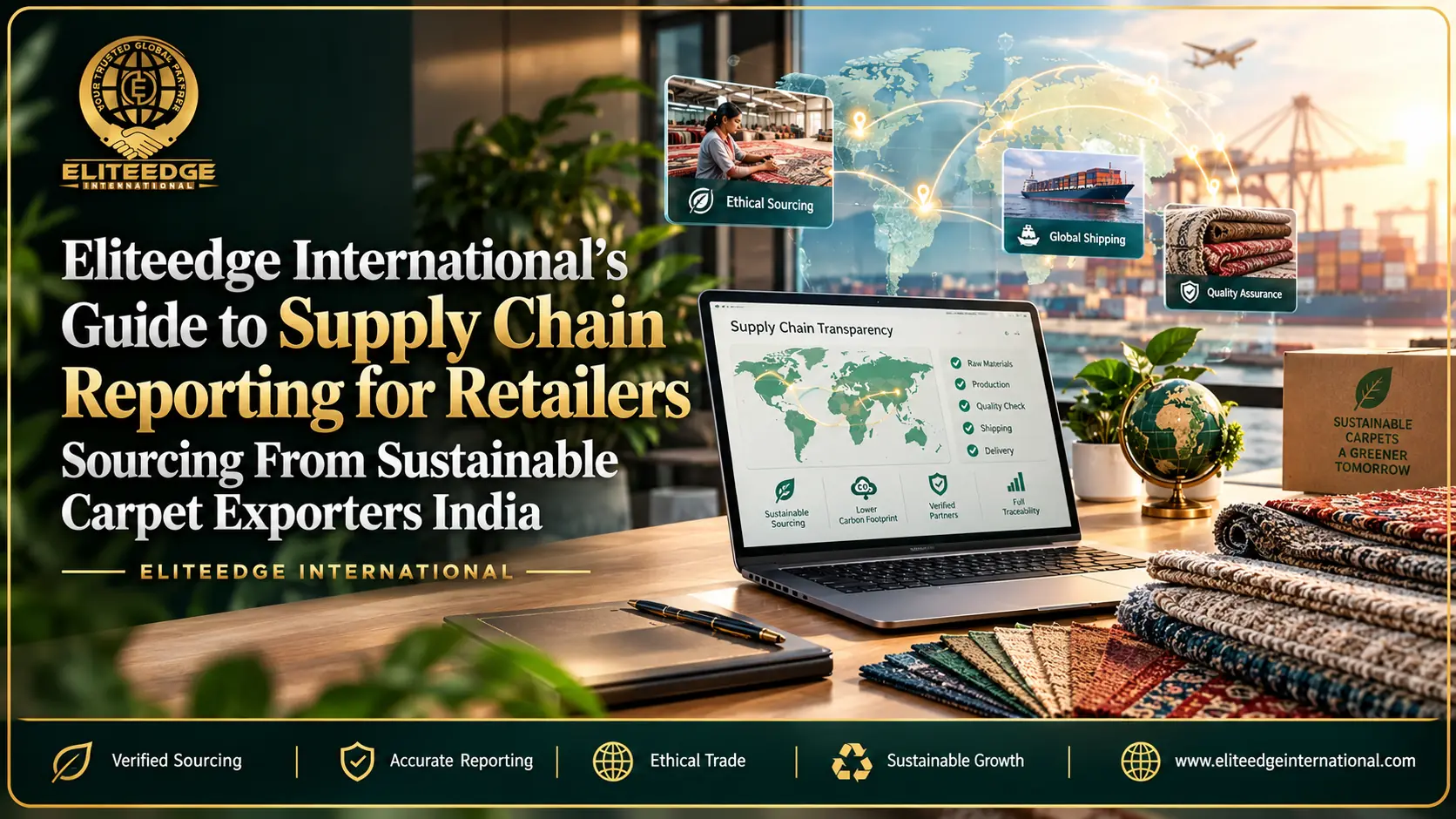

Environmental responsibility conversations in the export industry tend to fixate on the material a product is made from, while quietly overlooking everything that happens around that product on its journey from factory to buyer. Packaging waste, inefficient container loading, and unnecessary secondary shipments all carry a real environmental cost that has little to do with whether the underlying mat or carpet itself is biodegradable or recyclable. A genuinely responsible green carpet manufacturer for export pays attention to this operational side of the business just as carefully as the material composition of its products, since packaging and logistics decisions, made at scale across thousands of units, add up to a meaningful cumulative impact. Eliteedge International, based in Jalgaon, Maharashtra, treats these operational choices as a genuine part of its responsibility conversation with buyers, alongside the more commonly discussed material questions.
This article looks specifically at the packaging and shipping side of responsible export practice, an area that receives far less attention than material composition but offers buyers a genuinely actionable way to evaluate an eco friendly rugs manufacturer India claim beyond the marketing language attached to the product itself.
Why Packaging and Logistics Deserve Their Own Scrutiny
A product’s material composition is fixed at the point of manufacture, but the packaging and shipping decisions made around that product involve ongoing operational choices that a supplier makes, and can improve, order after order. Excessive packaging material, inefficient container loading that wastes shipping capacity, and unnecessary intermediate handling steps all represent avoidable waste that a thoughtful exporter can actively work to reduce over time, independent of whatever material the underlying product happens to be made from.
Buyers evaluating a supplier’s overall responsibility profile should ask about these operational practices specifically, rather than assuming that a supplier’s environmental positioning begins and ends with the raw material conversation. A supplier who has thought carefully about reducing packaging waste and maximising shipping efficiency is demonstrating a broader operational commitment to reducing unnecessary environmental impact, one that extends beyond a single material claim into the actual day to day mechanics of running an export business.
Packaging Practices That Reduce Waste Without Compromising Protection
Right Sizing Packaging to the Product
Oversized packaging wastes material and, less obviously, wastes shipping space, since a carton larger than necessary for its contents reduces how many units fit within a given container. A supplier that carefully right sizes its packaging to the actual dimensions of a folded mat or rolled carpet reduces material waste while also improving container utilisation, delivering a genuine double benefit from a single operational decision made during the packaging design process.
Minimising Unnecessary Secondary Packaging Layers
Some suppliers wrap products in multiple redundant layers of plastic or cardboard, more out of habit or an attempt to appear thorough than genuine protective necessity. A thoughtful review of what packaging layers actually contribute meaningful protection during transit, versus which layers add cost and waste without a corresponding protective benefit, allows a supplier to reduce material usage without compromising the product’s safe arrival at its destination.
Choosing Recyclable or Reusable Packaging Materials Where Practical
Where packaging materials themselves can reasonably be recyclable or reusable, such as cardboard cartons that a buyer’s own warehouse can recycle locally, this represents a genuine, verifiable improvement over packaging materials with no practical end of life pathway at the buyer’s destination. Buyers can ask suppliers directly what packaging materials are used and whether those materials are commonly recyclable in the buyer’s specific destination market, since recycling infrastructure varies considerably by region and by local municipal capability.
Shipping Efficiency as an Environmental and Cost Consideration
Maximising Container Utilisation
Every partially filled shipping container represents wasted transport capacity, meaning the environmental cost of that voyage is spread across fewer actual units of product than a fully utilised container would achieve. Suppliers who plan orders carefully to maximise container fill, whether through combining multiple product lines or coordinating order timing across buyers, reduce the effective environmental footprint per unit shipped compared to a supplier who ships partially empty containers as a matter of routine convenience rather than deliberate planning.
Reducing Unnecessary Intermediate Handling
Each additional point of handling a shipment passes through before reaching its final destination adds both cost and environmental impact, from additional transport legs to additional warehousing steps. A supplier with efficient, well planned logistics minimises unnecessary intermediate handling, moving goods as directly as practical from factory to final shipping point rather than routing through unnecessary intermediate stops that add distance and handling without adding value to the buyer receiving the shipment.
Consolidating Orders Where Buyers Allow It
For buyers placing multiple smaller orders across a short timeframe, consolidating those orders into fewer, more fully loaded shipments where timing allows reduces the total number of shipping voyages required to deliver the same total volume of goods. Buyers interested in this kind of consolidation should discuss order timing flexibility directly with their supplier, since a small adjustment to order scheduling can sometimes meaningfully improve overall shipping efficiency for both sides of the transaction.
How This Fits Into a Broader Responsible Sourcing Conversation
Packaging and shipping efficiency should be understood as one component of a broader responsible sourcing conversation, not a replacement for the material composition questions discussed in relation to biodegradability, recyclability, and recycled content elsewhere in this ongoing series. A supplier who has optimised their packaging and logistics but makes no honest effort on material transparency is only partially addressing their overall environmental footprint, just as a supplier focused exclusively on material claims while ignoring operational waste is leaving a meaningful area of potential improvement unaddressed and unexamined.
Buyers genuinely interested in evaluating a green carpet manufacturer for export relationship comprehensively should ask about both dimensions together, using the supplier’s willingness to discuss operational packaging and shipping practices, alongside material composition questions, as a fuller picture of how seriously that business actually approaches its environmental responsibilities across every part of the operation, not just the parts that make for easy marketing copy.
How Buyers Can Verify Claims Rather Than Simply Accepting Them
Packaging and shipping efficiency claims are, like material claims, easy to state and harder to verify without some concrete follow up from the buyer’s side. Buyers who want genuine confidence in a supplier’s operational practices can request photographs of a typical export carton and its dimensions relative to the product it contains, ask for details on typical container fill rates for their specific order size, and request the specific packaging material specifications used for a particular product line. These concrete requests move the conversation from general reassurance toward specific, checkable detail that a genuinely careful supplier should be able to provide without hesitation.
Buyers with an ongoing relationship spanning multiple orders can also track this information over time, comparing packaging dimensions and container efficiency across successive shipments to see whether a supplier’s stated commitment to efficiency actually holds up in practice, order after order, rather than only appearing in a single well prepared response during the initial sales conversation. This kind of longitudinal verification, while requiring a bit more effort than a one time question, gives buyers considerably more confidence than relying on a single early assurance that may or may not reflect how the supplier actually operates once the relationship becomes routine and less closely scrutinised.
Balancing Operational Efficiency With Product Protection Standards
Buyers should be cautious of one potential pitfall in this conversation: a supplier that has genuinely over indexed on packaging cost reduction to the point where product protection during transit becomes compromised. The goal of thoughtful packaging design is to eliminate genuinely unnecessary waste, not to strip away protection that the product actually needs to survive a multi week international voyage intact. Buyers should ask specifically how a supplier balances these two considerations, since a supplier who can articulate this balance thoughtfully, rather than simply pointing to lower packaging costs as an unqualified positive, demonstrates a more mature and genuinely considered approach to the tradeoff involved.
A useful practical test for buyers is to review the condition of a sample shipment or an early order upon arrival, checking specifically whether packaging reductions have introduced any new risk of damage compared to previous, more heavily packaged shipments from the same or a different supplier. This direct, observed evidence offers buyers a far more reliable signal than any verbal assurance about how a particular packaging change was designed to maintain adequate protection while reducing unnecessary material use.
The Cost Side of Packaging and Shipping Efficiency
Buyers sometimes assume that environmentally motivated packaging and shipping improvements automatically come with a higher price tag, but the relationship between these two factors often runs in the opposite direction. Reducing unnecessary packaging material directly reduces the supplier’s own material costs, while better container utilisation reduces the freight cost per unit shipped, meaning many of these operational improvements support lower overall pricing rather than higher pricing once implemented consistently across a supplier’s export operation.
This alignment between environmental efficiency and cost efficiency gives buyers a useful additional lens for evaluating supplier claims. A supplier whose packaging and shipping practices genuinely reflect careful, waste conscious planning should generally be able to offer competitive pricing precisely because that same planning discipline reduces unnecessary cost alongside unnecessary environmental impact. A supplier claiming strong environmental credentials while offering noticeably higher prices than competitors, without a clear explanation for the difference, may be worth questioning more closely about where exactly that additional cost is actually going.
What Buyers Can Ask to Evaluate This Dimension
Buyers can ask a prospective supplier specifically how packaging is right sized to their products, what materials are used in export cartons, how container loading is planned to maximise utilisation, and whether order consolidation options exist for buyers placing multiple smaller orders within a similar timeframe. Buyers can raise these operational questions directly with the green carpet manufacturer for export team at Eliteedge International as part of a broader supplier evaluation process that goes beyond the product itself.
Buyers interested specifically in an eco friendly rugs manufacturer India relationship that addresses both material and operational considerations should treat this packaging and logistics conversation as a standard, expected part of their due diligence, not a niche or unusual line of questioning reserved only for the most environmentally focused buyers in the room.
Conclusion
Genuine environmental responsibility in the export industry extends well beyond the material composition of the product itself into the operational choices a supplier makes around packaging design, container utilisation, and shipping logistics. A truly thoughtful green carpet manufacturer for export considers both dimensions together, and buyers evaluating an eco friendly rugs manufacturer India relationship should ask about packaging and shipping practices specifically, rather than assuming this operational side of the business has already been addressed simply because the underlying material story sounds reassuring on its own.
If your business wants to work with a supplier who takes both material transparency and operational packaging efficiency seriously, reach out to Eliteedge International to discuss your specific sourcing and shipping requirements.
Frequently Asked Questions
1. Why does packaging efficiency matter separately from the product material itself?
Packaging and shipping decisions represent ongoing operational choices independent of the underlying product material, and they carry their own real environmental cost through material waste and shipping inefficiency. Evaluating both dimensions separately gives buyers a more complete picture of a supplier’s overall environmental practices.
2. What questions should buyers ask about packaging waste specifically?
Buyers should ask how packaging is right sized to the actual product dimensions, whether packaging materials are commonly recyclable in the buyer’s destination market, and whether any packaging layers exist primarily out of habit rather than genuine protective necessity during transit.
3. How does container utilisation affect environmental impact?
A partially filled shipping container spreads the environmental cost of that voyage across fewer actual units of product than a fully utilised container would achieve, meaning better container planning reduces the effective environmental footprint per unit shipped.
4. Can buyers request order consolidation to improve shipping efficiency?
Yes, buyers placing multiple smaller orders within a similar timeframe can discuss consolidating those orders into fewer, more fully loaded shipments directly with their supplier, provided order timing allows for this kind of coordination without disrupting the buyer’s own inventory planning.
5. Is recyclable packaging always available regardless of destination market?
Recycling infrastructure varies considerably by region, so buyers should confirm with their supplier whether specific packaging materials used are commonly recyclable in their own particular destination market rather than assuming recyclability applies universally everywhere.
6. Does reducing packaging material compromise product protection during shipping?
Not necessarily. Thoughtful right sizing and a careful review of which packaging layers actually contribute meaningful protection allows a supplier to reduce unnecessary material waste while still maintaining adequate protection for the product during international transit.
7. How does packaging efficiency relate to a supplier’s overall responsibility claims?
Packaging and logistics efficiency represents one component of a broader responsible sourcing conversation, complementing rather than replacing material composition questions. Buyers evaluating a supplier comprehensively should ask about both dimensions together for a fuller picture.
8. Should buyers expect every supplier to discuss packaging and shipping practices in detail?
Buyers should treat this as a standard, reasonable part of supplier due diligence rather than a niche question. A supplier confident in their operational practices, including Eliteedge International, should be able to discuss these details specifically rather than deflecting to general reassurance.