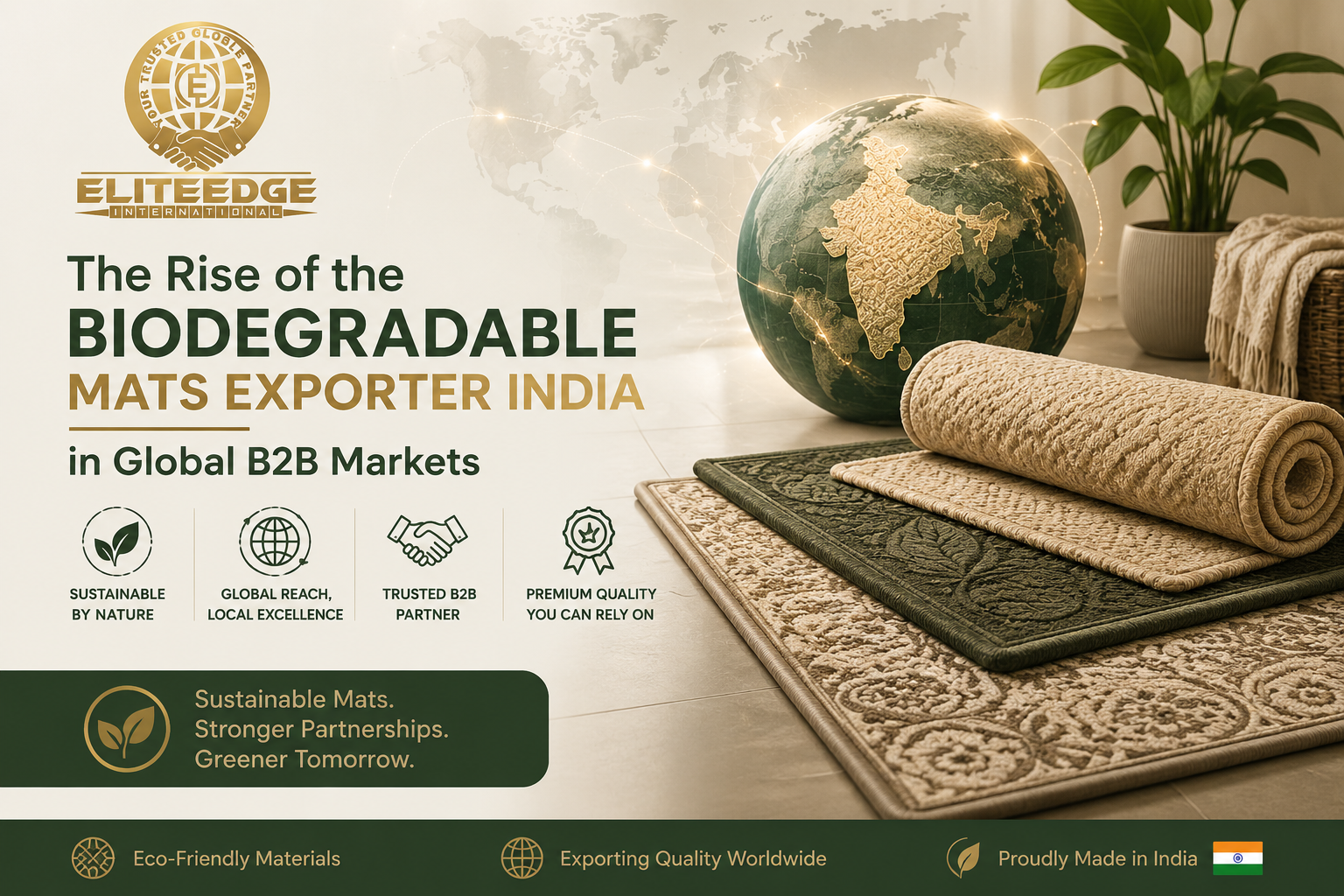
The modern commercial landscape is undergoing a profound structural evolution driven by legislative sustainability directives and eco conscious consumer paradigms. International B2B buyers are looking beyond standard floor coverings toward fully regenerative product life cycles. At the center of this movement is the specialized biodegradable mats exporter India, providing international markets with naturally derived, high performance floor solutions. By combining ancient agricultural wisdom with state of the art manufacturing refinement, Indian exporters are successfully setting new benchmarks for ethical trade in global distribution networks.
Analyzing the Material Science Behind Biodegradable Floor Solutions
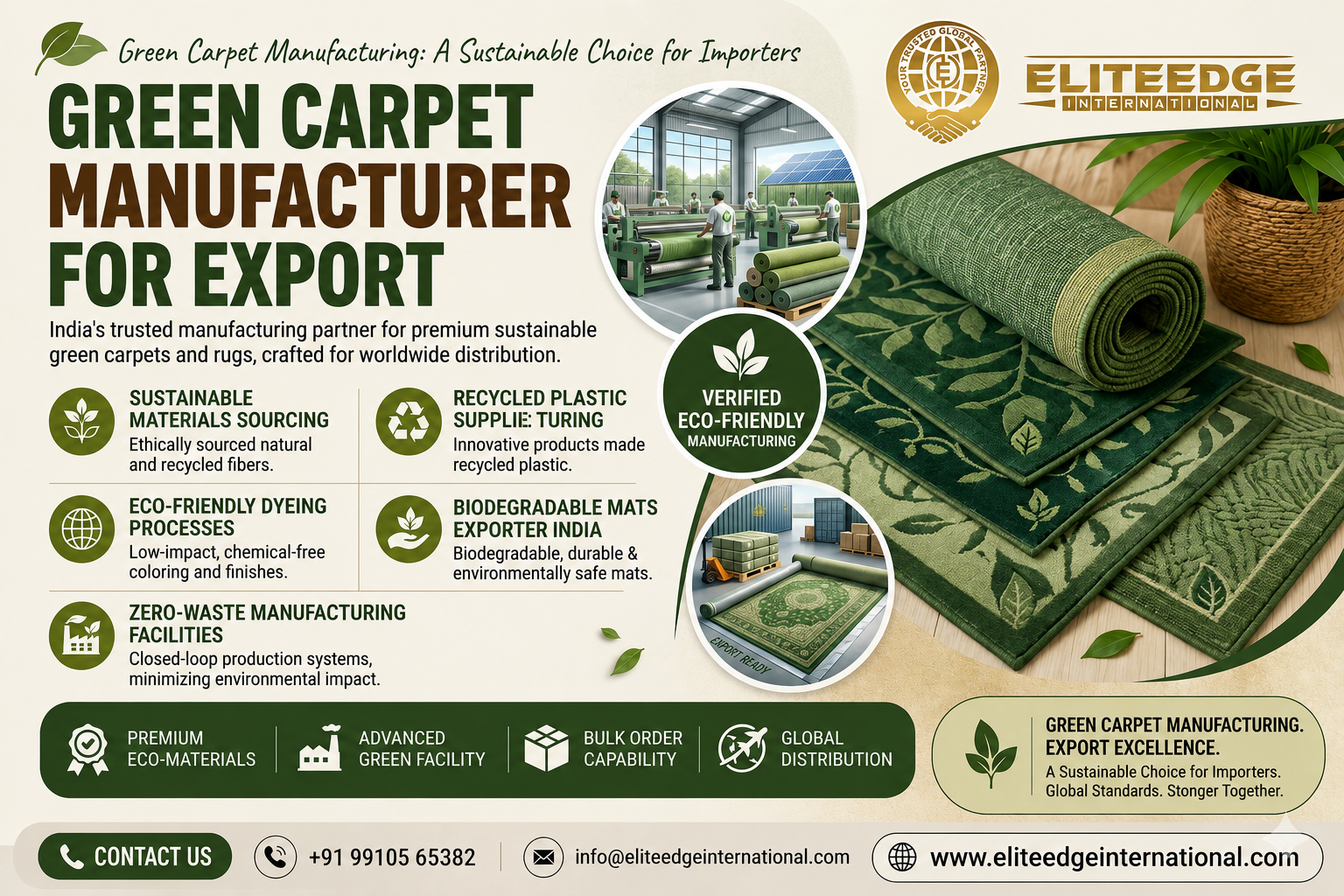
The manufacturing architecture of authentic biodegradable floor coverings relies on premium natural fibers such as coir, jute, organic cotton, and specialized seagrass varieties. A premier biodegradable mats exporter India ensures that raw agricultural resources are cultivated via regenerative farming practices without synthetic chemical interventions. These natural plant fibers possess organic cellulose structures that offer incredible natural tensile strength, sound insulation, and inherent thermal regulation properties.
For corporate purchasing departments focused on heavy duty commercial applications, verifying the natural decomposition rate is crucial. These floor solutions are designed to serve reliably in high traffic commercial zones for years, and then safely return to the ecosystem upon disposal. Working directly with an experienced camping mats bulk supplier India enables enterprise clients to secure natural, breathable outdoor utility options that decompose harmoniously without leaving toxic microplastic residues or chemical traces in the soil matrix.
Industrial Scaling and Weaving Expertise in India
India possesses an unrivaled historical legacy in textile craftsmanship which has been systematically upgraded with modern industrial machinery. Production facilities run heavy duty industrial looms designed specifically to handle coarse natural yarns without compromising structural consistency. The weaving configurations are meticulously tight, which significantly mitigates fiber shedding and ensures excellent structural performance under relentless foot traffic conditions globally.
Global logistics managers must identify manufacturers operating as a lightweight outdoor mats supplier to ensure freight optimization. While natural fibers generally carry more intrinsic mass than synthetic alternatives, advanced processing methodologies allow Indian factories to spin ultra fine, low density natural yarn structures. These innovations yield floor solutions that are highly portable yet robust, making them ideal for modern recreational and eco hospitality installations.
Meeting Strict Regulatory Standards for International Retail
Entering strict Western retail arenas requires complete validation of international consumer safety and eco certifications. Importers must confirm that their manufacturing partners maintain valid documentation for compostability and biodegradable compliance. Sourcing product lines through a certified eco PP mats exporter India alongside a natural fiber supplier provides corporate catalogs with the ultimate product diversification strategy, appealing to both circular economy recycling frameworks and natural decomposition models.
Every single container deployment must pass thorough regulatory inspection processes. Leading global enterprises rely exclusively on a trusted exporter of premium rugs & pp mats who manages comprehensive quality check documentation internally. This professional oversight guarantees that the shipments comply with international pesticide residue laws, soil cleanliness mandates, and fire safety ratings, eliminating cross border trade friction entirely.
Maximizing Commercial Profitability via Volume Sourcing
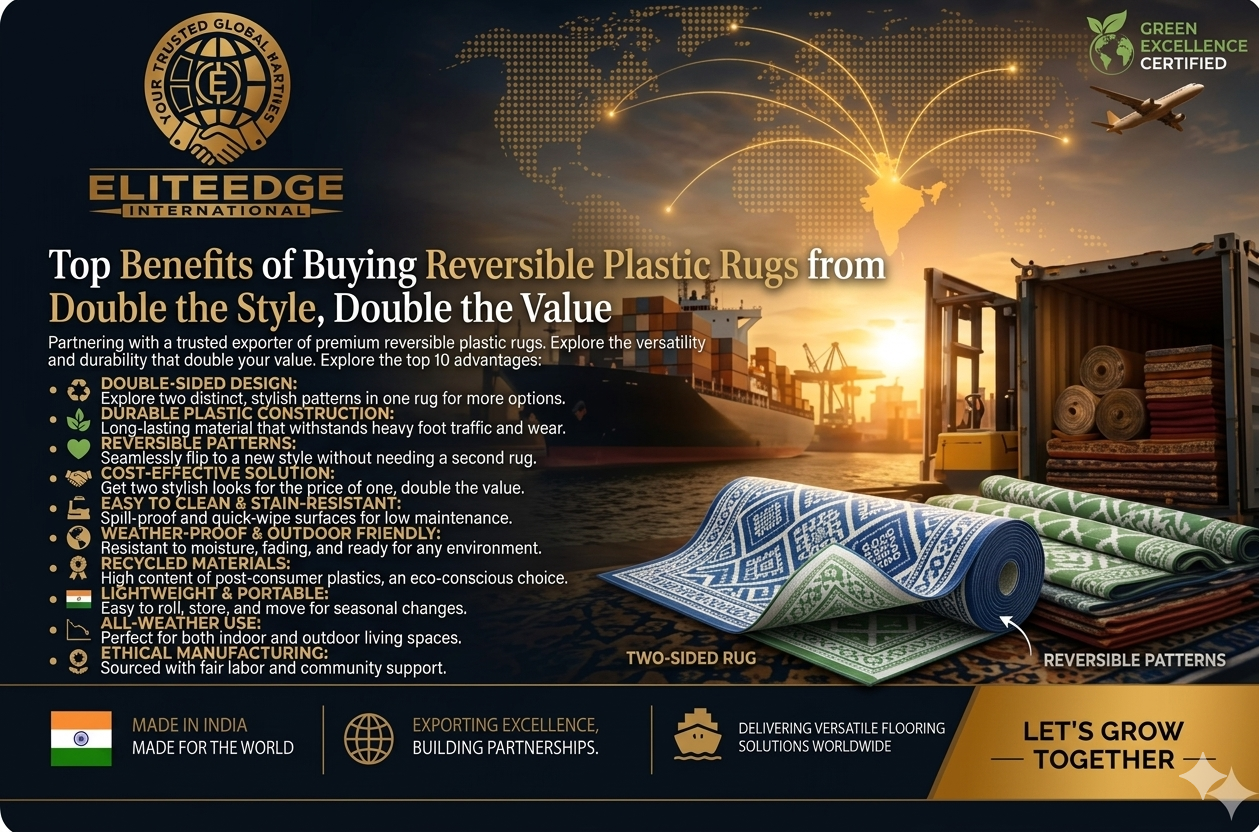
Securing competitive commercial margins in the sustainability sector requires direct large scale manufacturing partnerships. Enterprise buyers benefit from economies of scale by working closely with providers of foldable plastic mats wholesale and natural fiber options within a unified procurement portfolio. Indian production clusters provide excellent cost advantages due to direct access to vast regional agricultural zones, avoiding expensive middleman logistics networks.
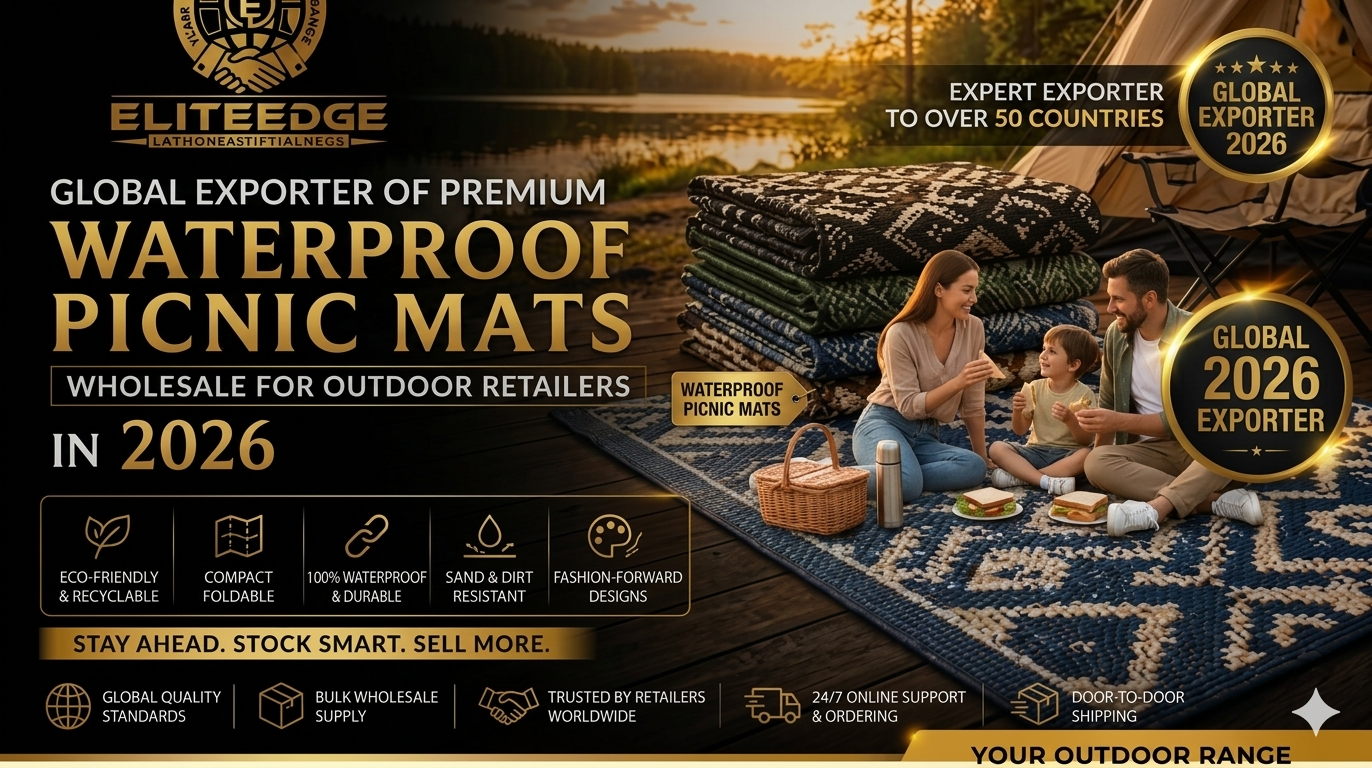
To ensure long term inventory stability, corporate distribution lines should establish clear multi season procurement agreements with their chosen waterproof picnic mats exporter. Having access to multi functional, natural utility mats that resist environmental humidity through natural plant oils ensures steady consumer sales throughout the fiscal year. This strategic alignment ensures consistent supply chain performance while fortifying your brand reputation for ecological transparency.
Frequently Asked Questions About Organic Textile Supply Chains
Q: How long does the typical decomposition process take for these organic mats once disposed of?
The precise chronological timeline for organic decomposition depends heavily on the specific natural fiber utilized and the ambient environmental conditions of the disposal site. Under active industrial composting setups or rich microbial soil exposure, premium jute and coir products generally break down fully within six to twelve months. Because a certified biodegradable mats exporter India avoids using persistent synthetic chemical coatings or non organic dyes, the material transforms naturally into nutrient rich organic compost. This seamless degradation loop ensures that your retail enterprise supports authentic zero waste circular economy initiatives perfectly.
Q: Are natural fiber floor solutions naturally resistant to mold development in high humidity environments?
Natural plant fibers possess excellent innate breathability which allows moisture to evaporate rapidly from the woven structure. To further maximize durability, premium Indian manufacturing operations utilize specialized organic anti fungal treatments derived from natural plant extracts and mineral salts during the fiber preparation phase. This advanced processing ensures that the floor coverings resist subsurface mold and mildew cultivation even when deployed in humid geographic areas, provided they are allowed to dry thoroughly after heavy exposure to water.
Q: What specific international certifications should a reliable biodegradable mats exporter India hold?
A globally compliant exporter should ideally present valid certifications such as OK Compost certification from TÜV Austria or compliance with EN 13432 standards for compostability. For the raw material supply chain, certificates from the Global Organic Textile Standard verify ethical and pesticide free agricultural harvesting. Buyers should systematically request these original certified documents directly from the factory compliance manager during the primary onboarding process to satisfy corporate environmental governance requirements.
Q: How does the structural durability of organic fiber options compare directly to synthetic polypropylene?
While synthetic polypropylene offers superior absolute resistance to chemical abrasion and completely zero moisture absorption, high grade natural fibers provide exceptional mechanical durability and high puncture resistance. The tight industrial weaving patterns utilized by Indian factories ensure that coir and jute floor solutions can handle intense foot traffic across hospitality venues for years. For applications requiring complete water immersion, synthetics are ideal, whereas natural fibers excel in environmental aesthetics, breathability, and eco friendly disposal.
Q: Can these organic product lines be customized with vibrant corporate branding logos and patterns?
Yes, Indian factories are fully equipped with specialized screen printing and digital textile pigment application systems that use eco friendly water based inks. These sustainable pigments bond deeply with the natural vegetable fibers, producing sharp geometric patterns, complex corporate logos, and deep colorways. The engineering team can calibrate the printing machinery to match your precise corporate brand guidelines while ensuring that the chemical profile remains completely non toxic and fully biodegradable.
Q: What exact quality control inspections are conducted prior to container port dispatch?
Prior to freight container sealing, dedicated internal quality control technicians execute a multi phase inspection checklist. This rigorous methodology includes checking the exact weight per unit, verifying precise dimensional tolerances, testing edge stitching tensile strength, and conducting moisture content analysis using calibrated digital meters. The moisture content must remain strictly below predefined percentages to prevent any risk of microbial activity during the extended ocean transit phase, ensuring pristine product delivery.
Q: How do natural fiber products help global hospitality brands improve their corporate sustainability ratings?
By substituting standard petroleum derived synthetic floor coverings with naturally regenerative plant fiber alternatives, hospitality corporations immediately reduce their Scope 3 carbon footprint. These products are carbon neutral during their agricultural growth phase and require significantly less fossil fuel energy to manufacture compared to synthetic alternatives. Presenting these tangible ecological benefits within corporate ESG annual reports enhances institutional brand valuation and satisfies strict national environmental procurement mandates.
Q: What are the standard dimensions available for commercial volume orders?
Indian manufacturing facilities maintain highly versatile production parameters, offering standard runner sizes, large area configurations such as nine by twelve feet, and custom modular tiles. For major enterprise clients, looms can be adjusted to manufacture custom continuous rolls up to four meters wide, which can then be cut to length at destination warehouses. This dimensional versatility allows procurement managers to cater effectively to residential, corporate office, and boutique hospitality layouts simultaneously.
Q: What steps are taken to ensure the agricultural supply chain remains free from exploitative labor?
Reputable exporters strictly collaborate with agricultural cooperatives that are certified by international social accountability frameworks such as SA8000 or Sedex Members Ethical Trade Audits. These framework agreements mandate fair liveable wages, completely safe working environments, regular shift limits, and the absolute prohibition of child labor across every tier of production. By ensuring social equity at the agricultural root level, global buyers can confidently market their products to ethical consumer bases.
Q: How should overseas enterprise buyers manage inventory storage to preserve natural fiber products?
To preserve the pristine structural integrity of natural fiber shipments, wholesale inventory should be stored in well ventilated, climate controlled warehouses away from direct exposure to rain or continuous atmospheric condensation. Pallets should be kept elevated off the floor surface to promote continuous airflow underneath the stacked cargo crates. Maintaining a stable warehouse environment ensures the product line remains in absolute premium condition for extended retail shelf life.
Strategic Content Summary and Operational Conclusion
The commercial shift toward sustainable sourcing is an enduring structural realignment of international trade. Partnering with an expert biodegradable mats exporter India empowers global corporate buyers to lead the market with exceptional environmental compliance. From verified material authenticity to highly scalable automated manufacturing, Indian producers deliver the reliability required by modern enterprise operations. Securing your supply line today ensures your brand satisfies the growing global demand for high performance, earth friendly floor solutions.